
Signal CX


May 22, 2026

Why safety belongs at the heart of customer experience
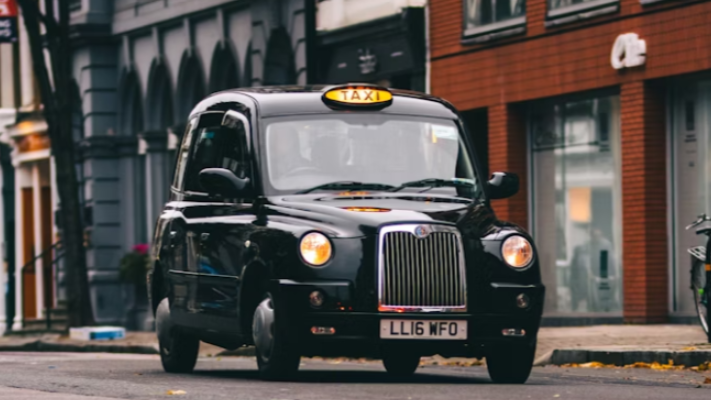
It was just before ten o’clock on a Tuesday evening when my black cab pulled up a little short of where I needed to be. The driver had missed a turning and we’d ended up on the wrong side of a one-way system. I could see the door from where we sat and told him not to worry about it.
He wouldn’t hear of it. He couldn’t possibly drop me here, he said. Not at this time of night. So he pulled the cab over, locked it up, and walked with me almost to the door, stopping a discreet distance away so as not to intrude “I’ll just make sure you get in,” he said. And then, poof, he was gone, like a caped crusader.
In every other way, it had been an unremarkable journey but my driver’s attention to my safety got me thinking.
It’s strange but safety just doesn’t seem to come up that much when we talk about customer experience. For most organisations, safety means compliance: processes, procedures, risk registers. But when we’re on the receiving end as customers, safety done well should be the absolute expression of care. It should feel that someone, and indeed the whole organisation, is paying attention to us as individuals, and that frankly, my dear, they do give a damn.
This tension between compliance and experience shows in the smallest things. Despite all the flights I have taken, I still get a little nervous when I fly, so I love watching a cabin crew member do a proper seat belt check. Making eye contact, a reassuring nod that says “I’m looking out for you.” Compare that to the crew member who works the same aisle as though chasing up a class of naughty children who haven’t done their homework, making passengers feel guilty if they haven’t ‘complied’. One makes you feel cared for. The other makes you feel like an inconvenience to your own safety. The distinction matters because safety delivered as compliance is something done to customers. Safety delivered as care is something done for them.
The same tension plays out on station platforms every day. “Stand behind the yellow line” is one of the most repeated safety instructions in rail. Delivered as a bark, it is a compliance instruction: stay back because the rules say so. Delivered with a look that says I am telling you this because I don’t want you to get hurt, it becomes something entirely different. The words are identical but what changes is the implied relationship between the person saying them and the person hearing them. One positions the passenger as a potential rule-breaker to be managed. The other positions them as a person worth protecting. Most passengers can feel the difference, even if they couldn’t articulate it.
Driver-only trains sharpen this further. In that context, the quality of the driver’s announcements is doing far more work than most operators realise. A confident, warm, informative voice that welcomes passengers on board, explains what’s happening when the train is delayed, and signs off with something that sounds like a human rather than a script is not just good communication, it is the primary signal that someone capable and attentive is in charge. Its absence leaves a gap that more vulnerable passengers in particular will feel. Presence through a speaker is not the same as physical presence. But in its absence, it matters more than most organisations have ever stopped to measure.
As an oft lone female traveller (they call me Milly no Mates), another safety signal I love is when I check in at a hotel and my key card is handed with the number facing down, the information communicated without words. It tells me that they have already thought about my safety in ways I haven’t needed to. It’s care made operational. And it earns a different kind of loyalty than a complimentary upgrade, because it speaks to something more fundamental than comfort.
And yet for most organisations, safety and customer experience are not just philosophically separate, they are structurally separate. Safety sits in its own function, with its own reporting lines, its own metrics and its own language. Incident rates. Near misses. Compliance scores. A CX director reading this article may agree with every word and have no organisational authority to change how safety is actually delivered.
That gap, between where safety lives in the org chart and where customers feel it, is where the experience can fall short. Safety teams optimise for what they measure. If they are measuring compliance and incident rates, they will get compliance and incident rates. If nobody is measuring whether customers feel looked after, the answer is probably that many of them don’t. Not because the people doing the work don’t care, but because the system hasn’t asked them to think about it that way.
This is not a criticism of safety professionals, many of whom care deeply about the people they protect. It is an observation about organisational design. Until safety and CX are in genuine conversation with each other, the security guard who notices a lone passenger looking lost and quietly checks in with them will remain an individual act of thoughtfulness rather than a designed experience. And individual acts of thoughtfulness, however admirable, are not a strategy.
There is another way to think about this, and it starts with a simple observation: when people feel looked after rather than managed, they become participants in their own safety rather than subjects of it.
Our own work at SignalCX, running trials in airport security environments, produced a consistent finding: when security officers were warm and courteous, passenger compliance improved and queues moved faster. When officers were brusque or authoritarian, compliance fell. Not because passengers were being deliberately awkward, but because anxiety increases friction and warmth reduces it. Being spoken to kindly makes people feel more secure, and that has real consequences: queues move faster, escalations drop, and shifts end less fraught.
The crowd self-polices too. Watch what happens in a quiet carriage when someone takes a loud phone call. Eyes are exchanged, others shift a bit and if you’re in the UK there is a lot of quiet sighing. Someone, eventually, often says something. There is a quiet social pressure that operates entirely independently of any member of staff. On a platform where the atmosphere feels calm and orderly, passengers naturally look out for each other. The organisation that creates the right conditions doesn’t have to do all the work itself.
Disney understood this at scale. Scholars have drawn direct lines between Michel Foucault’s concept of the panopticon (the prison designed so inmates can never be certain whether they’re being watched) and Disney’s approach to park design. The comparison sounds sinister until you look at what Disney actually does with it. Everything about the environment, the queues that entertain you into not minding them, the clear and open spaces, and where staff (or ‘cast members’ to use Disney-speak) are positioned, is designed to make you feel looked after rather than controlled. Visitors comply willingly, happily even, because the environment signals safety and order rather than surveillance and suspicion.
And here’s the other thing. We often talk about the need for personalisation in customer experience, and safety is not one size fits all. The assumptions we make about what customers notice, and what makes them feel safe, tend to reflect the perspective of whoever is doing the assuming. For example, safety experiences designed by the male gaze can feel lacking to female customers.
A 2024 study published in the journal Violence and Gender used heat map technology to track where people focus their attention when walking through a space. Female participants consistently focused on a much wider span of areas outside the path: bushes, dark corners, poorly lit recesses. Male participants focused on the path ahead. Same environment; fundamentally different experience of it. If your safety signals have been designed from a single, unconsidered perspective, you are almost certainly failing the customers who need reassurance most.
If the people designing your safety environment have not actively considered how different customers experience it, no amount of good intent will close that gap. The solo traveller arriving late. The passenger navigating an unfamiliar terminal. The guest checking in alone. These customers are reading your environment in ways that the people who designed it probably never considered. And they will draw conclusions accordingly.
For too long, the received wisdom has been that you don’t draw too much attention to safety. Mention it too often and you risk making people anxious, reminding them of the very thing you want them not to think about. It is a logic that sounds reasonable and is, on reflection, exactly wrong.
When an organisation handles safety visibly, warmly and well, the effect is not anxiety, it is the opposite. Anxiety thrives in uncertainty: the unlit corner, the unanswered question, the driver who says nothing for forty minutes. Visible care removes uncertainty. And when uncertainty falls, so does anxiety. The passenger who feels looked after doesn’t spend the journey on edge. They settle, relax and enjoy.
That is the link between safety and trust that most organisations have been too cautious to make explicitly. The organisation that overtly cares about your safety is not the one making you nervous. It is the one you come back to.
Get in touch
Thank you. We’ll bee (see what we did there) in touch with you shortly
